

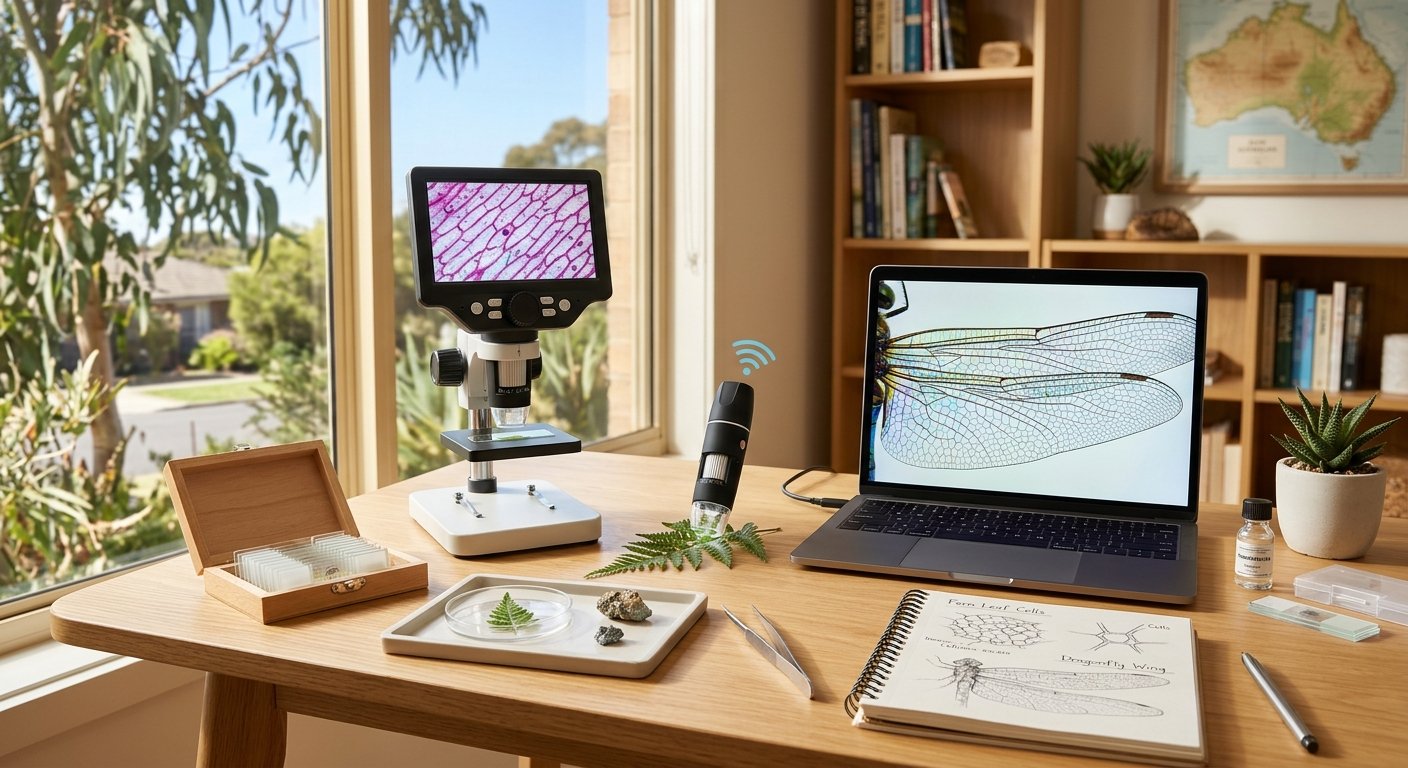
Uncover the hidden details of the microscopic world from home. Explore our top picks for USB and LCD digital microscopes available across Australia—reviewed for image clarity, magnification power, and ease of use.
Quick Comparison: Top Digital Microscopes in Australia
| Microscope Model | Display Type | Magnification Range | Camera / Resolution | Best For |
|---|---|---|---|---|
| TOMLOV DM201 Pro 7-Inch LCD Microscope | Built-in 7″ IPS Screen + HDMI | 10x–1200x | 16 MP Photo / 1080p Video | Electronics soldering, coins & family exploration |
| Plugable USB 2.0 Digital Microscope | PC / Mac / Chromebook via USB | 10x–250x | 2.0 MP Sensor | Students, classrooms & budget desktop viewing |
| Celestron TetraView LCD Digital Microscope | 4.3″ Touch Screen + Mechanical Stage | 40x–1600x (Optical + Digital) | 5 MP CMOS Sensor | High school biology & prepared glass slides |
| SKYBASIC WiFi Handheld Digital Microscope | Wireless to iOS / Android / PC | 50x–1000x | 1080p HD | Kids, outdoor field trips & garden inspection |
| Andonstar AD246S-M 3-Lens HDMI Microscope | 7″ LCD + HDMI Output | Up to 2000x (3 Interchangeable Lenses) | UHD 2160p Video | Serious hobbyists, watchmakers & biology slides |
Why Digital Microscopes Have Replaced Traditional Eyepieces at Home
Traditional optical microscopes require squinting through a tiny single eyepiece—which often causes eye strain, frustrates young kids, and makes sharing discoveries with family or classmates difficult. Modern USB and LCD digital microscopes solve this by projecting crisp, magnified live video onto a bright screen or computer monitor, letting you snap high-resolution photos and record videos with the press of a button.
Across Australia, digital microscopes have become a go-to tool for:
- Curious Kids & Science Students: Examining insect wings, eucalyptus leaves, pond water, and textile fibers without needing complex slide preparation.
- Coin & Stamp Collectors: Inspecting mint marks, die errors, and surface wear on Australian coins and collectibles.
- Electronics & Soldering Hobbyists: Working comfortably under a long-working-distance lens while repairing circuit boards.
Best Digital Microscopes Available on Amazon Australia
1. TOMLOV DM201 Pro 7-Inch LCD Digital Microscope (Best Overall All-Rounder)
If you want a standalone microscope that requires zero computer setup right out of the box, the TOMLOV DM201 Pro is one of the highest-rated models on Amazon Australia. Its large 7-inch rotatable IPS screen delivers sharp colors from any viewing angle, while the tall aluminum stand gives you plenty of room underneath to examine three-dimensional objects like rocks, coins, circuit boards, or flowers.
- Key Specs: 7-inch HD IPS display, 10x–1200x continuous zoom, 8 built-in LED ring lights plus 2 flexible gooseneck side lights, includes 32GB microSD card and wired remote.
- Pros: Bright, spacious screen prevents eye fatigue; flexible side lights eliminate glare on shiny coins; connects to a TV or monitor via HDMI.
- Cons: Designed primarily for opaque 3D objects rather than ultra-high-power bacterial slides.
2. Celestron TetraView LCD Digital Microscope (Best for True Biology & Glass Slides)
Unlike tabletop inspection scopes that look down at solid objects, the Celestron TetraView is a genuine compound biological microscope equipped with a 4.3-inch full-color LCD touchscreen. Featuring four fully achromatic glass objective lenses (4x, 10x, 20x, and 40x) and a precision mechanical stage, it lets high school students and science enthusiasts inspect blood cells, plant cross-sections, and microorganisms with true optical clarity.
- Key Specs: 40x to 400x optical magnification (up to 1600x with 4x digital zoom), 5 MP sensor, mechanical X-Y slide stage, includes 7 prepared glass slides and carrying case.
- Pros: True optical glass objectives deliver sharp cellular detail; mechanical stage allows smooth, precise slide movement; battery-powered option for field use.
- Cons: Higher price tag; requires thin translucent specimens mounted on glass slides.
3. Plugable USB 2.0 Digital Microscope with Flexible Arm (Best Budget USB Option)
Trusted by teachers, engineers, and families alike, the Plugable USB Digital Microscope plugs directly into any Windows PC, Mac, or Chromebook without needing proprietary drivers. Its bendable gooseneck stand lets you hover effortlessly over leaves, fabrics, or skin, while a capacitive touch button on top captures instant snapshots.
- Key Specs: 10x–250x magnification, 2.0-megapixel sensor, dimmable LED halo light, weighted observation pad with measurement scale.
- Pros: Exceptional reliability and software compatibility; very affordable; lightweight enough to pop off the stand for handheld inspection.
- Cons: Must remain tethered to a computer or laptop to view images.
4. SKYBASIC WiFi Wireless Handheld Digital Microscope (Best Portable Scope for Kids)
Want to take science exploration out into the backyard or bushwalk? The SKYBASIC Wireless Microscope creates its own local Wi-Fi hotspot that streams 1080p live video directly to an iPhone, iPad, or Android tablet—no internet connection needed. Kids can hold it like a flashlight to inspect tree bark, rocks, and bugs in real time.
- Key Specs: 50x–1000x digital magnification, rechargeable battery (approx. 3 hours runtime), 8 adjustable LEDs, mini desk stand included.
- Pros: Completely wireless and pocket-sized; easy app interface for kids; very budget-friendly gift.
- Cons: Hand-holding at high magnification requires a steady hand or using the included mini stand.
How to Choose the Right Digital Microscope: 3 Key Rules
- Know Your Specimens (3D Objects vs. Glass Slides):
- If you want to look at coins, insects, plants, jewelry, or electronics , choose a long-working-distance LCD or USB inspection microscope (like the TOMLOV or Plugable ).
- If you want to study cells, bacteria, or pond microorganisms , choose a compound biological microscope with bottom illumination and glass objective lenses (like the Celestron TetraView ).
- Don’t Be Fooled by “1000x” Marketing Claims: Many budget USB scopes advertise 1000x or 1600x magnification, which is mostly digital zoom. Focus instead on sensor resolution (at least 2 MP to 12 MP) , optical glass quality , and adjustable LED lighting .
- Look for Side Lighting (Gooseneck LEDs): Overhead ring lights often bounce harsh glare off metallic coins or glossy leaves. Models with dual bendable side LEDs give you dramatically clearer contrast.
Frequently Asked Questions
Can I connect an LCD digital microscope to my TV or computer?
Yes. Most modern LCD microscopes—including the TOMLOV DM201 Pro—feature an HDMI output for big-screen TV viewing and a USB-C port to stream directly onto a Windows or Mac computer.
Do digital microscopes come with prepared slides?
Biological compound models like the Celestron TetraView include a starter box of prepared slides, whereas tabletop LCD and USB scopes are ready to inspect everyday household items right out of the box.
Is a USB or built-in LCD screen better for kids?
A built-in LCD screen is usually easier for younger children because they don’t have to coordinate moving an object under a lens while looking across the desk at a separate laptop monitor.
(Disclosure: LatinMarket is reader-supported. When you buy through links on our site, we may earn an affiliate commission at no extra cost to you.)